Physical Address
304 North Cardinal St.
Dorchester Center, MA 02124
Physical Address
304 North Cardinal St.
Dorchester Center, MA 02124

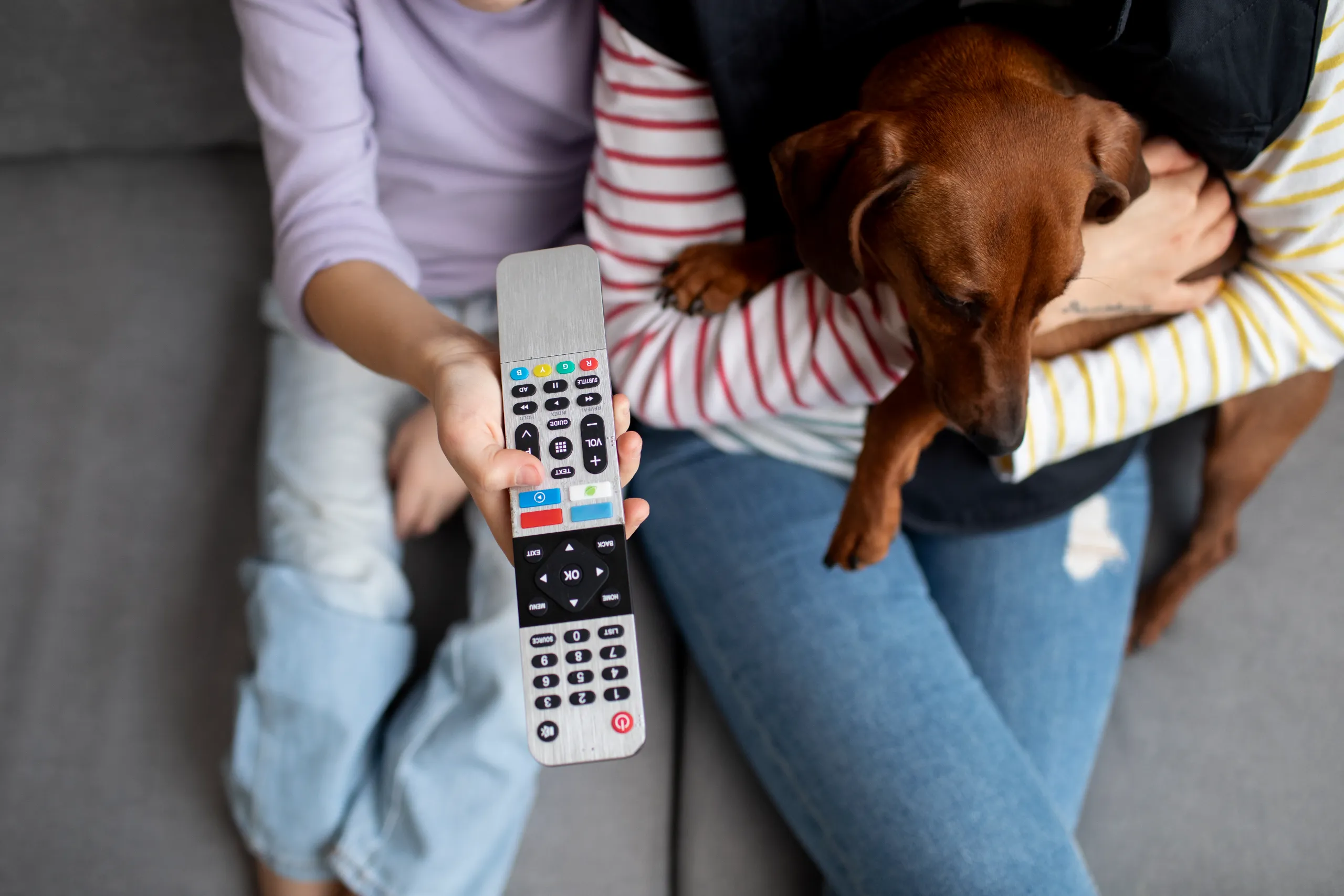
Have you ever noticed your dog watching television alongside you? Some dogs barely glance at the screen, while others seem completely fascinated by animals, cartoons, and even certain sounds. A recent social media trend has brought this behavior into the spotlight, with videos of dogs watching a children’s animated series called Sea Look attracting millions of views. So why do dogs love watching TV? and what makes certain television programs so interesting to our four-legged companions?
According to veterinary research, the answer may have something to do with how dogs see, hear, and respond to movement.
Sea Look is an animated children’s series that premiered in South Korea in 2022. Each episode consists of short segments, usually no longer than three minutes, featuring cartoon seals moving around on ice. The show has no dialogue, relying instead on music and animal sounds.
Although it wasn’t necessarily created for pets, the series has become unexpectedly popular among dog owners.
Videos shared online show dogs sitting in front of their televisions, watching the animated seals with noticeable interest. Some even bark at the screen or react to particular scenes and sounds.
The PBS NewsHour report featured several owners whose dogs appeared particularly interested in the show. One golden retriever initially barked at the television before becoming increasingly absorbed in the episodes. Two boxers also showed similar interest, with one reportedly watching for several minutes at a time.
So, what exactly are dogs seeing on the screen?
Veterinary ophthalmologist Freya Moat, a professor at the University of Wisconsin-Madison’s School of Veterinary Medicine, explains that dogs aren’t completely colorblind, as many people believe.
Dogs see colors differently from humans, with a more limited range of color perception. This means certain visual combinations may stand out more clearly to them than others.
Moat suggests that the natural-looking movement, high contrast, and colors in Sea Look could help explain some dogs’ interest. The blue surroundings and brown seals, for example, create a noticeable visual contrast.
Movement also plays an important role. Dogs can respond to moving animals on screen, particularly when the images resemble things they might encounter in real life.
Interestingly, research discussed in the report suggests that dogs tend to show more interest in watching other dogs than other animals. Humans, on the other hand, appear to rank much lower in their television preferences.
Just like people, dogs have different interests and reactions. Some may happily sit and watch a program, while others might lose interest after a few seconds.
Moat’s research suggests that younger dogs, as well as herding and sporting breeds, tend to watch television more frequently.
However, watching isn’t always a sign of enjoyment.
Some dogs become anxious or overly excited when they see animals on screen. Their reactions may include barking, running toward the television, or trying to escape.
This is an important consideration for owners. A dog that appears interested in a television program may actually be experiencing excitement or stress rather than simply enjoying the entertainment.
Paying attention to your dog’s body language can help you understand the difference. If your pet becomes distressed, repeatedly barks, or seems uncomfortable, it’s best to turn the television off or switch to something less stimulating.
Sea Look isn’t the first television program to attract attention from dogs.
According to the PBS report, previous canine favorites have included Disney’s The Lion King, the GEICO Gecko commercials, and the animated film Flow.
Some dogs have even reportedly reacted negatively to certain programs, including the thriller series Severance.
Moat suggests that sounds could be part of the explanation. High-pitched music, sudden noises, and other audio effects may attract a dog’s attention just as much as the images themselves.
In other words, what catches your dog’s attention might not always be what you think they’re watching.
While dogs watching cartoons might seem like a fun research topic, the science behind it has a broader purpose.
Moat’s work also examines how animals age and whether some aspects of aging in dogs follow patterns similar to those in humans.
Because dogs and their owners often share their daily environments and activities, researchers have an opportunity to study changes in vision and other functions over time.
The research discussed in the report has already found that older animals can experience reduced function in the retina, the part of the eye responsible for detecting light and helping us see.
Understanding these changes could contribute to a better picture of how vision and aging affect our pets.
There’s no reason to assume that every dog needs television for entertainment. However, if your pet enjoys watching certain programs and remains relaxed, it can be an occasional activity to share.
The important thing is to observe how your dog responds. Some may enjoy watching animals move across the screen, while others may become overstimulated by the images or sounds.
And if your dog isn’t interested in television at all, that’s perfectly normal too.
The next time your dog settles beside you while you’re watching TV, you might find yourself wondering what exactly has caught their attention. As research continues, we’re learning more about how our pets experience the world around them, including the one on our screens.
Source: PBS NewsHour, reporting by William Brangham.